Modern enterprise software demands speed, security, scalability, and maintainability. Organizations building SaaS platforms, ERP systems, CRMs, healthcare portals, fintech applications, and enterprise APIs need frameworks that accelerate development without compromising quality.
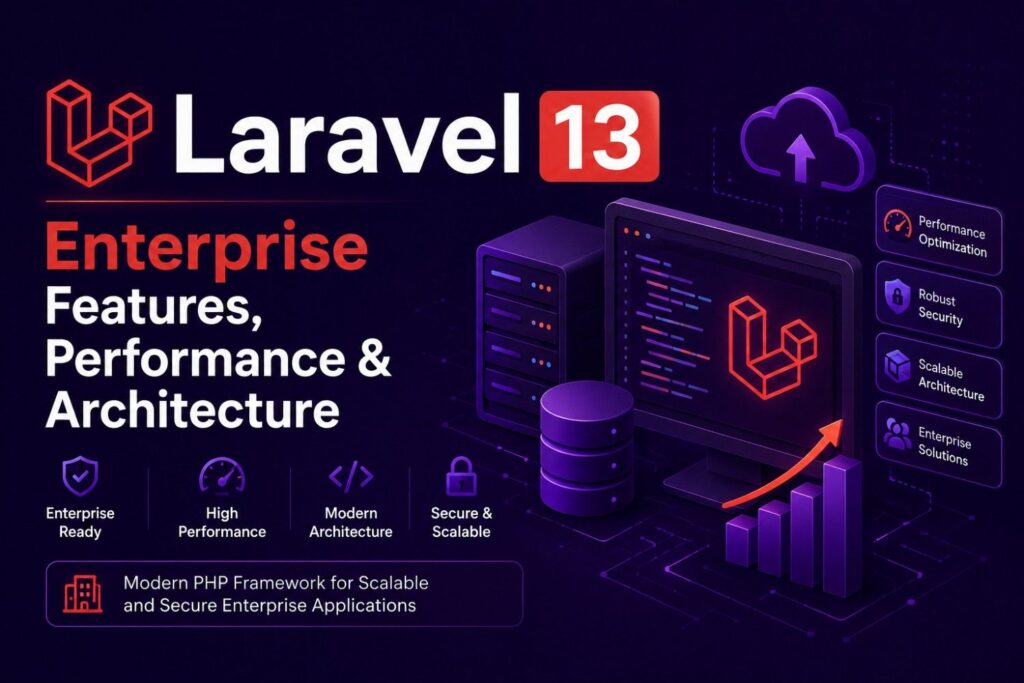
Laravel has consistently remained one of the most popular PHP frameworks because it offers elegant syntax while providing enterprise-grade capabilities. With the arrival of Laravel 13, developers gain an even stronger foundation for building scalable business applications powered by the latest PHP ecosystem.
Whether you’re migrating from Laravel 10, Laravel 11, or Laravel 12 or starting a completely new enterprise project Laravel 13 introduces improvements that simplify development, enhance security, and improve long-term maintainability.
This guide explores everything you need to know about Laravel 13 for modern enterprise development.
What is Laravel 13?
Laravel 13 is the newest major version of the Laravel framework, designed for developers building modern web applications and APIs using PHP.
It builds upon previous releases by focusing on:
- Improved developer experience
- Better performance
- Modern PHP compatibility
- Enhanced security
- Simplified architecture
- Better testing workflows
- Enterprise scalability
- Cloud-native deployments
Laravel continues to embrace clean architecture principles while reducing boilerplate code.
Why Enterprises Choose Laravel
Enterprise software differs significantly from small websites.
Businesses require applications that support:
- Millions of users
- Complex business logic
- High availability
- API integrations
- Multi-tenancy
- Advanced authentication
- Role-based permissions
- Compliance requirements
- Long-term maintainability
Laravel addresses these requirements through a mature ecosystem rather than requiring developers to build everything from scratch.
Major benefits include:
- Rapid development
- Excellent documentation
- Large community
- Strong package ecosystem
- Built-in security
- Automated testing
- Queue processing
- Scheduling
- Event-driven architecture
Laravel 13 Requirements
Laravel 13 embraces the latest PHP ecosystem.
Typical requirements include:
| Component | Recommended Version |
| PHP | 8.4+ |
| Composer | Latest |
| MySQL | 8+ |
| PostgreSQL | Latest Stable |
| MariaDB | Latest |
| Redis | Latest |
| Node.js | LTS |
| npm / pnpm | Latest |
Keeping dependencies updated ensures better security and improved performance.
What’s New in Laravel 13
Laravel 13 introduces several refinements across the framework.
Improved Performance
Enterprise applications often process thousands of requests every second.
Laravel 13 focuses on:
- Faster request lifecycle
- Better route caching
- Improved configuration loading
- Lower memory consumption
- Optimized dependency injection
Applications become more responsive while reducing server costs.
Better Developer Experience
Laravel has always prioritized developer productivity.
Laravel 13 improves:
- Cleaner syntax
- Better IDE support
- Enhanced type safety
- Improved error messages
- Better debugging experience
These improvements reduce development time considerably.
Modern PHP Features
Laravel 13 fully embraces modern PHP capabilities.
Developers can leverage:
- Constructor property promotion
- Readonly properties
- Enums
- Attributes
- Union types
- Intersection types
- Named arguments
- Match expressions
These language improvements create cleaner and more maintainable codebases.
Enterprise Architecture with Laravel 13
Large applications should never place all business logic inside controllers.
Laravel encourages layered architecture.
Typical enterprise structure:
Controllers
│
Services
│
Repositories
│
Models
│
Database
Additional layers often include:
- DTOs
- Actions
- Policies
- Jobs
- Events
- Listeners
- Notifications
- Commands
This organization improves scalability and maintainability
Service Container and Dependency Injection
One of Laravel’s biggest enterprise strengths is its Service Container.
Benefits include:
- Loose coupling
- Easier testing
- Better abstraction
- Cleaner architecture
- Automatic dependency resolution
Instead of tightly coupling classes, services are injected automatically.
This follows SOLID design principles.
Eloquent ORM Enhancements
Laravel’s Eloquent ORM remains one of the framework’s most powerful features.
Enterprise capabilities include:
- Relationships
- Polymorphic relations
- Global scopes
- Query scopes
- Model events
- Soft deletes
- UUID support
- Lazy collections
Developers can build complex data models while maintaining readable code.
Database Optimization
Laravel 13 includes numerous tools for optimizing enterprise databases.
Best practices include:
Database Indexing
Use indexes for:
- Foreign keys
- Search columns
- Frequently filtered data
Eager Loading
Prevent N+1 query problems using:
User::with(‘orders’)->get();
Chunk Processing
Instead of loading massive datasets:
User::chunk(500, function ($users) {
//
});
This dramatically reduces memory usage.
Queue System
Enterprise applications rely heavily on background jobs.
Laravel supports queues for:
- Email sending
- PDF generation
- Image optimization
- Data imports
- Report generation
- Notifications
- Payment processing
Supported drivers include:
- Redis
- Database
- Amazon SQS
- Beanstalkd
Queue workers improve responsiveness by offloading expensive tasks.
Scheduling Automation
Laravel Scheduler replaces traditional cron management.
Typical scheduled tasks:
- Backup generation
- Email reports
- Invoice creation
- Cleanup jobs
- Cache clearing
- Database optimization
One cron entry can manage hundreds of scheduled jobs.
API Development
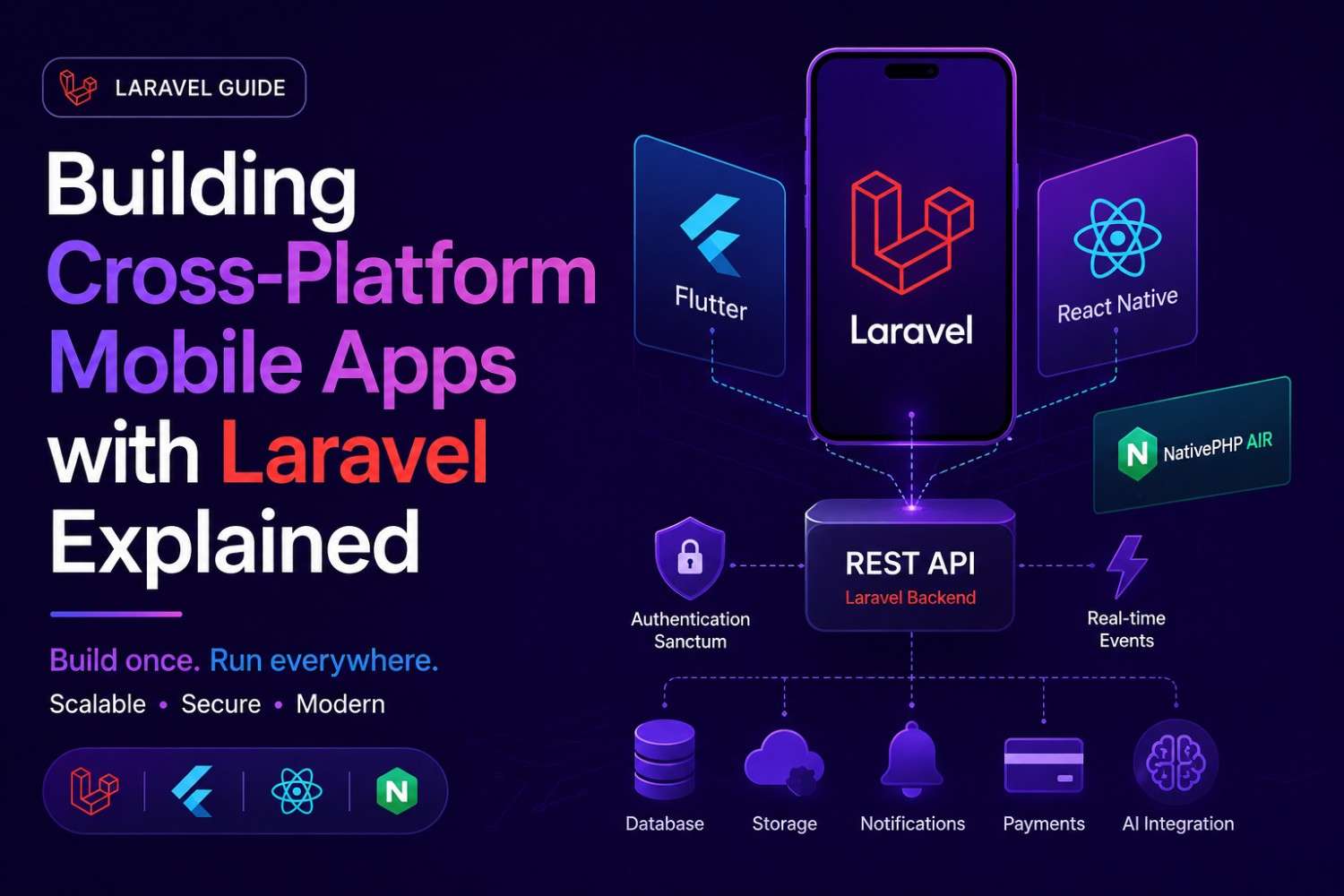
Laravel 13 is an excellent framework for REST APIs.
Common API features include:
- Authentication
- Rate limiting
- Resource responses
- Validation
- Versioning
- Pagination
- JSON serialization
Developers can also implement GraphQL alongside REST where appropriate.
Authentication and Authorization
Enterprise security starts with authentication.
Laravel supports:
- Session authentication
- Token authentication
- API authentication
- OAuth
- Social login
- Multi-factor authentication
Authorization features include:
- Policies
- Gates
- Middleware
- Role-based permissions
- Permission-based access
Laravel Sanctum vs Passport
For enterprise APIs, developers commonly choose between Sanctum and Passport.
Laravel Sanctum
Ideal for:
- SPA authentication
- Mobile apps
- Personal access tokens
Advantages:
- Lightweight
- Easy configuration
- Fast implementation
Laravel Passport
Better suited for:
- OAuth2
- Enterprise integrations
- Third-party authentication
- Large API ecosystems
Validation Improvements
Laravel validation remains one of its strongest features.
Rules include:
- Required
- Unique
- Exists
- URL
- Password
- Date
- Enum
Custom validation rules allow organizations to enforce business-specific requirements.
Security Features
Laravel 13 includes enterprise-grade security.
Built-in protections include:
CSRF Protection
Prevents cross-site request forgery.
SQL Injection Protection
Parameterized queries reduce injection risks.
XSS Protection
Blade automatically escapes output.
Password Hashing
Uses modern hashing algorithms.
Encryption
Sensitive information can be encrypted using Laravel’s encryption services.
Signed URLs
Protects temporary download links.
Rate Limiting
Defends APIs against abuse.
Caching
Caching dramatically improves enterprise application performance.
Laravel supports:
- Redis
- Memcached
- Database
- File cache
Common cache targets include:
- Queries
- API responses
- Configuration
- Routes
- Views
Event-Driven Development
Laravel events simplify loosely coupled architecture.
Example workflow:
User Registers
│
▼
Event Fired
│
▼
Listeners Execute
• Send Welcome Email
• Create Profile
• Notify CRM
• Award Points
Each listener operates independently.
Notifications
Laravel supports multiple notification channels:
- SMS
- Slack
- Database
- Broadcast
- Push notifications
This enables organizations to centralize communication.
File Storage
Laravel integrates seamlessly with cloud storage providers.
Supported storage options include:
- Local
- Amazon S3
- FTP
- SFTP
- Object storage
Developers can switch storage providers with minimal code changes.
Real Time Features
Modern enterprise applications increasingly require real-time functionality.
Laravel supports:
- WebSockets
- Broadcasting
- Live notifications
- Live dashboards
- Chat systems
These features improve user engagement.
Testing in Laravel 13
Testing is essential for enterprise software.
Laravel provides:
Unit Testing
Tests individual classes.
Feature Testing
Tests complete workflows.
HTTP Testing
Verifies API endpoints.
Database Testing
Ensures data integrity.
Browser Testing
Simulates real user interactions.
Continuous integration pipelines can automatically execute these tests before deployment.
Logging and Monitoring
Enterprise applications require comprehensive monitoring.
Laravel integrates with logging systems that support:
- Error tracking
- Performance monitoring
- Exception reporting
- Custom log channels
Centralized logging simplifies production troubleshooting.
Multi-Tenancy
Many SaaS businesses require multi-tenant architecture.
Laravel supports implementations using:
- Database per tenant
- Shared database
- Shared schema
- Tenant-specific middleware
This architecture allows multiple organizations to securely share the same application.
Deployment
Laravel 13 supports modern deployment strategies.
Popular deployment environments include:
- Docker
- Kubernetes
- Virtual Private Servers
- Cloud platforms
- Dedicated servers
Recommended deployment practices include:
- Zero-downtime deployment
- Environment configuration
- Queue workers
- Cache optimization
- Database migrations
- Health monitoring
DevOps Integration
Laravel works exceptionally well with modern DevOps pipelines.
Typical CI/CD workflow:
Developer Pushes Code
↓
Git Repository
↓
Automated Tests
↓
Static Analysis
↓
Build
↓
Deployment
↓
Production
Automation reduces deployment errors significantly.
Performance Best Practices
To maximize Laravel 13 performance:
- Cache routes
- Cache configuration
- Optimize Composer autoloading
- Use eager loading
- Queue expensive tasks
- Optimize database indexes
- Use Redis caching
- Minimize unnecessary middleware
- Compress responses
- Use a CDN
Combined, these techniques substantially improve scalability.
Laravel Ecosystem
Laravel’s ecosystem is one of its greatest strengths.
Popular tools include:
- Laravel Forge
- Laravel Vapor
- Laravel Nova
- Laravel Horizon
- Laravel Pulse
- Laravel Reverb
- Laravel Sail
- Laravel Pint
These tools simplify server management, monitoring, code quality, local development, and real-time communication.
Common Enterprise Use Cases
Laravel 13 powers a wide variety of enterprise solutions, including:
- Customer Relationship Management (CRM)
- Enterprise Resource Planning (ERP)
- Learning Management Systems (LMS)
- Healthcare portals
- Banking dashboards
- Fintech platforms
- HR management systems
- Inventory management
- Project management software
- SaaS applications
- Marketplace platforms
- E-commerce systems
- Booking platforms
- Internal business portals
Its flexibility makes it suitable for organizations of all sizes.
Laravel 13 Best Practices
For enterprise success:
- Follow SOLID principles.
- Keep controllers thin.
- Move business logic into services.
- Write automated tests.
- Use Form Requests for validation.
- Implement repository patterns where beneficial.
- Use queues for long-running tasks.
- Secure secrets with environment variables.
- Monitor logs continuously.
- Keep dependencies updated.
- Document APIs thoroughly.
- Review code through pull requests.
These practices improve maintainability over the lifetime of the application.
Should You Upgrade to Laravel 13?
If your organization is using an older Laravel version, upgrading to Laravel 13 can provide long-term benefits.
Reasons to upgrade include:
- Better performance
- Improved security
- Modern PHP compatibility
- Enhanced developer productivity
- Better testing support
- Improved scalability
- Long-term framework support
- Access to the latest ecosystem tools
For enterprise applications, staying current reduces technical debt and simplifies future maintenance.
Conclusion
Laravel 13 continues to establish itself as one of the most capable frameworks for modern PHP enterprise development. By combining elegant syntax with enterprise-grade features such as robust authentication, flexible queue management, powerful caching, event-driven architecture, comprehensive testing tools, and seamless cloud integration, it enables development teams to build secure, scalable, and maintainable applications with confidence.