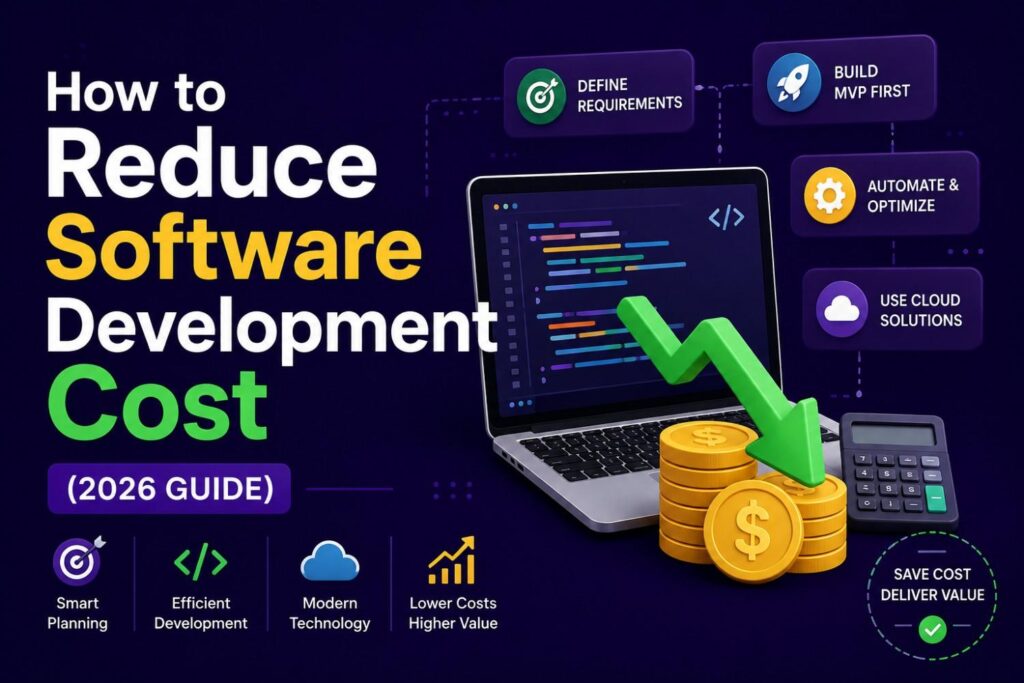
Software development is a significant investment, whether you’re building a startup MVP, a SaaS platform, an enterprise application, or a custom business solution. While every organization wants to keep development costs under control, reducing expenses shouldn’t come at the cost of performance, security, or user experience.
The good news is that lowering software development costs isn’t about hiring the cheapest developers or cutting essential features. It’s about making smarter decisions throughout the software development lifecycle from project planning and technology selection to testing, deployment, and maintenance.
Businesses that define clear requirements, prioritize high-value features, automate repetitive tasks, and adopt efficient development practices often deliver better products while spending significantly less over the long term.
In this guide, you’ll learn practical, proven strategies to optimize software development costs without sacrificing quality, scalability, or future growth.
Why Software Development Projects Go Over Budget
Many software projects exceed their original budget because of avoidable planning and execution mistakes rather than technical challenges. Understanding these common pitfalls is the first step toward preventing unnecessary expenses.
| Budget Killer | Impact on Cost | Why It Happens |
|---|---|---|
| Scope Creep | Very High | Continuous addition of new features during development |
| Poor Requirements | High | Unclear project goals lead to rework |
| Wrong Technology Stack | High | Increases development and maintenance effort |
| Technical Debt | High | Poor code quality results in expensive fixes later |
| Manual Testing | Medium | Slower releases and increased QA costs |
| Poor Communication | Medium | Delays, misunderstandings, and duplicated work |
| Late Design Changes | High | Requires redesign and redevelopment |
| Lack of Project Planning | Very High | Unrealistic timelines and inaccurate cost estimates |
Key Insight: Most budget overruns aren’t caused by coding—they’re caused by changing requirements, poor planning, and inefficient processes.
1. Define Clear Project Requirements Before Development
One of the most effective ways to reduce software development costs is to invest time in defining project requirements before writing a single line of code.
When requirements are vague or constantly changing, developers spend valuable time revisiting completed work, redesigning features, and fixing avoidable issues. This not only increases costs but also delays product launches.
A well-defined project should answer questions such as:
- What problem does the software solve?
- Who are the target users?
- Which features are essential for launch?
- What integrations are required?
- What are the performance and security expectations?
- What does success look like?
Benefits of Clear Requirements
- Fewer change requests
- More accurate cost estimates
- Faster development
- Reduced project risk
- Better communication between stakeholders
Pro Tip: Create a Software Requirements Specification (SRS) or Product Requirements Document (PRD) before development begins. Even a lightweight document can prevent costly misunderstandings later.
2. Start with a Minimum Viable Product (MVP)
Many businesses try to build every feature they can think of before launching. While this approach may seem comprehensive, it often leads to higher costs, longer timelines, and unnecessary complexity.
Instead, focus on building a Minimum Viable Product (MVP) a version of your software that includes only the core features needed to solve the primary problem and validate your idea with real users.
Launching an MVP allows you to:
- Reach the market faster
- Collect real user feedback
- Validate demand before investing further
- Reduce initial development costs
- Prioritize future features based on actual usage
MVP vs. Full Product
| Factor | MVP | Full Product |
|---|---|---|
| Development Cost | Lower | Higher |
| Time to Market | Faster | Longer |
| Risk | Lower | Higher |
| User Feedback | Earlier | Delayed |
| Feature Set | Essential Features | Complete Feature Set |
Many successful companies including Airbnb, Dropbox, and Uber began with a focused MVP before expanding their platforms.
3. Prioritize Features Based on Business Value
Not every feature contributes equally to your product’s success. Some deliver immediate value, while others can wait until later releases.
Feature prioritization ensures your budget is spent on functionality that has the greatest impact.
A simple framework like MoSCoW prioritization can help:
| Priority | Description |
|---|---|
| Must Have | Essential for launch |
| Should Have | Important but not critical |
| Could Have | Nice-to-have enhancements |
| Won’t Have (Yet) | Deferred to future releases |
By separating essential features from optional enhancements, development teams avoid spending time and money on low-priority functionality.
Example
Instead of launching with:
- AI recommendations
- Advanced analytics
- Live chat
- Gamification
- Multi-language support
Start with:
- User authentication
- Dashboard
- Core business workflow
- Payment processing
- Basic reporting
Additional features can be introduced after validating customer demand.
4. Choose the Right Technology Stack
The technology stack you choose has a long-term impact on development speed, hiring costs, scalability, maintenance, and infrastructure expenses.
Selecting technologies because they’re popular not because they fit your project can increase complexity and cost.
Consider the Following
- Team expertise
- Community support
- Scalability requirements
- Security features
- Integration capabilities
- Long-term maintenance
- Availability of developers
Technology Selection Guide
| Project Type | Recommended Stack |
|---|---|
| Startup MVP | Laravel, Node.js, Ruby on Rails |
| Enterprise Platform | Spring Boot, ASP.NET Core |
| AI Applications | FastAPI |
| Real-Time Applications | Node.js |
| Business Portals | Laravel or Django |
The goal isn’t to choose the “best” framework it’s to choose the one that aligns with your business goals and technical requirements.
5. Reuse Existing Solutions Instead of Building Everything from Scratch
Custom development is expensive. Whenever possible, leverage reliable third-party services instead of recreating functionality that’s already available.
Examples include:
| Functionality | Existing Solution |
|---|---|
| Authentication | Auth0, Firebase Authentication |
| Payments | Stripe, PayPal |
| Email Delivery | SendGrid, Mailgun |
| SMS Notifications | Twilio |
| Cloud Storage | Amazon S3 |
| Maps | Google Maps Platform |
| Analytics | Google Analytics, Mixpanel |
Using proven services offers several advantages:
- Faster implementation
- Lower development costs
- Better reliability
- Ongoing security updates
- Reduced maintenance
The key is to evaluate licensing costs against the time and resources required to build and maintain a custom solution.
6. Adopt Agile Development Practices
Traditional software development often follows a linear process where planning, development, testing, and deployment occur sequentially. While suitable for certain projects, this approach can make adapting to changing requirements expensive.
Agile development breaks projects into smaller iterations or sprints, allowing teams to deliver features incrementally and gather feedback throughout the development process.
Agile Benefits
- Faster delivery cycles
- Improved collaboration
- Early issue detection
- Better budget control
- Continuous customer feedback
- Reduced project risk
Agile vs. Traditional Development
| Factor | Agile | Traditional |
|---|---|---|
| Flexibility | High | Low |
| Customer Feedback | Continuous | End of Project |
| Risk | Lower | Higher |
| Release Frequency | Frequent | Infrequent |
| Adaptability | Excellent | Limited |
For startups and evolving products, Agile often results in lower overall costs by reducing expensive late-stage changes.
7. Automate Testing and Repetitive Processes
Manual testing becomes increasingly time-consuming as applications grow. Every new feature requires regression testing to ensure existing functionality still works.
Automated testing helps teams identify issues earlier, improve software quality, and accelerate release cycles.
Common types of automated testing include:
- Unit Testing
- Integration Testing
- API Testing
- End-to-End Testing
- Performance Testing
- Regression Testing
Benefits of Automation
| Manual Testing | Automated Testing |
|---|---|
| Time-Consuming | Fast Execution |
| Higher Human Error | Consistent Results |
| Difficult to Scale | Easily Repeatable |
| Slower Releases | Faster Deployments |
Although automation requires an upfront investment, it significantly reduces long-term testing costs, particularly for large or frequently updated applications.
8. Invest in UI/UX Design Early
Many organizations underestimate the importance of user experience until late in the project. Unfortunately, redesigning workflows or interfaces after development has started is significantly more expensive than addressing usability during the planning phase.
A well-designed user interface reduces development rework by ensuring that navigation, workflows, and interactions are validated before implementation.
Early investment in UI/UX provides benefits such as:
- Reduced redesign costs
- Higher user satisfaction
- Improved conversion rates
- Faster development
- Fewer change requests
- Better product adoption
Design Investment vs. Cost Impact
| Design Approach | Long-Term Cost |
|---|---|
| UI/UX Planned Before Development | Lower |
| UI Designed During Development | Medium |
| UI Redesigned After Launch | Highest |
Creating wireframes, user flows, and interactive prototypes before development helps stakeholders identify issues early, saving both time and budget.
Reducing software development costs begins long before development starts. Clear requirements, an MVP-first mindset, thoughtful feature prioritization, the right technology stack, strategic use of third-party services, Agile practices, automated testing, and early UI/UX planning all contribute to lower costs and better project outcomes.
By focusing on these foundational decisions, businesses can minimize rework, accelerate delivery, and make more efficient use of their development budget.
9. Choose the Right Outsourcing Model
Building an in-house development team isn’t always the most cost-effective option. Hiring, onboarding, infrastructure, employee benefits, and long-term commitments can significantly increase project costs, especially for startups and short-term initiatives.
Outsourcing allows businesses to access experienced developers and specialized expertise without the overhead of maintaining a full-time team. However, selecting the right engagement model is essential.
Outsourcing Models Comparison
| Model | Best For | Cost | Flexibility |
|---|---|---|---|
| Freelancer | Small projects, bug fixes | Low | High |
| Development Agency | End-to-end software development | Medium | Medium |
| Dedicated Development Team | Long-term products | Medium–High | High |
| Staff Augmentation | Expanding an existing team | Medium | Very High |
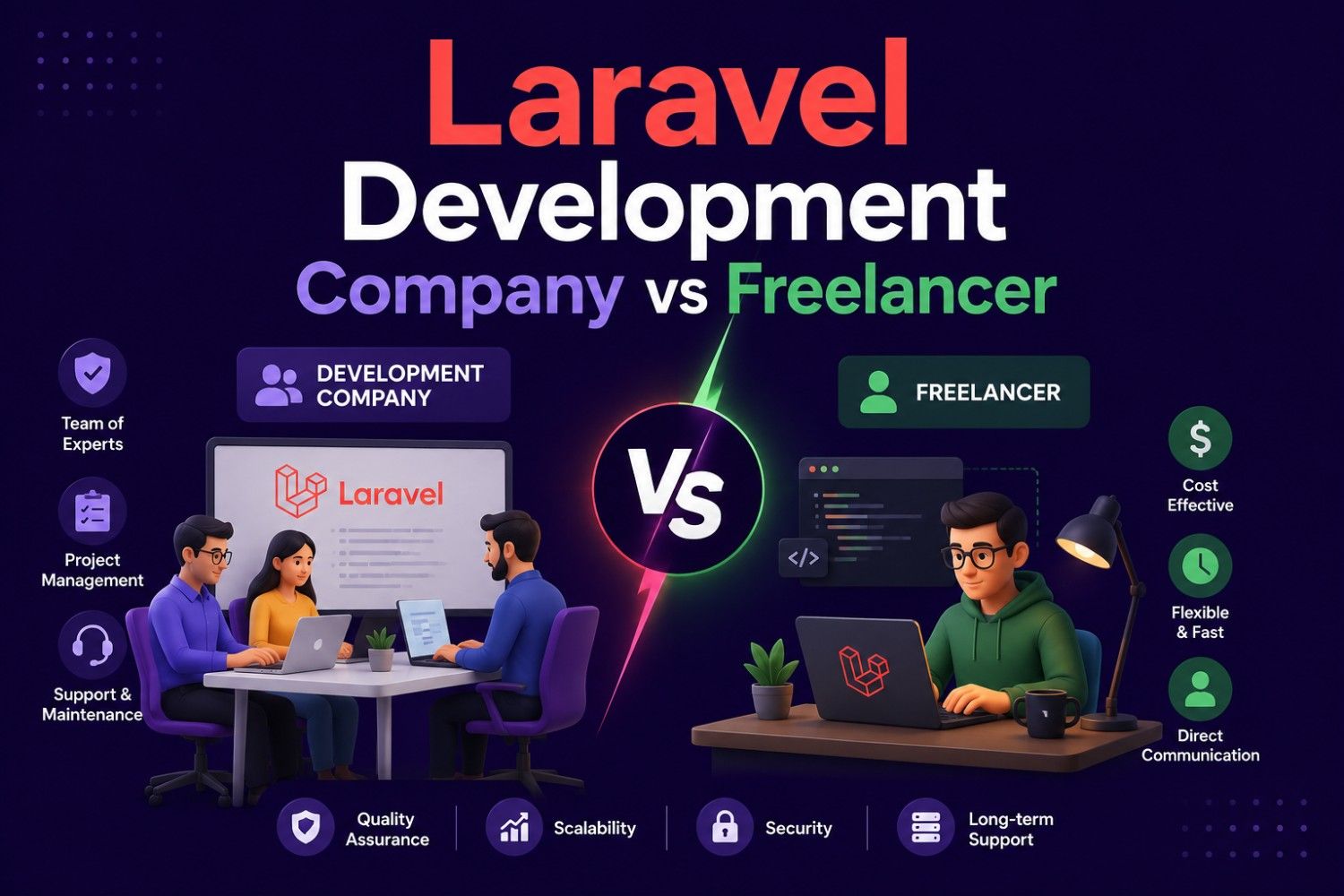
Freelancers can be cost-effective for simple tasks but may lack the resources needed for larger projects. Agencies provide complete project management and multidisciplinary expertise, while dedicated teams and staff augmentation offer greater flexibility for growing businesses.
Best Practice: Choose an outsourcing model based on your project’s complexity, timeline, and long-term goals—not solely on hourly rates.
10. Leverage Cloud Infrastructure
Modern cloud platforms eliminate the need for expensive on-premises servers while providing scalable, pay-as-you-go infrastructure.
Cloud services allow businesses to pay only for the resources they consume, making them particularly attractive for startups and applications with changing workloads.
Cloud vs. On-Premises Infrastructure
| Factor | Cloud | On-Premises |
|---|---|---|
| Initial Investment | Low | High |
| Scalability | Excellent | Limited |
| Maintenance | Managed | Self-Managed |
| Deployment Speed | Fast | Slower |
| Disaster Recovery | Built-in Options | Additional Investment Required |
Cloud platforms also provide managed databases, storage, monitoring, backups, and security services that reduce operational overhead.
11. Automate Deployments with CI/CD
Manual deployments increase the risk of errors, downtime, and delayed releases. Continuous Integration and Continuous Deployment (CI/CD) automates the process of building, testing, and deploying software.
Benefits include:
- Faster release cycles
- Fewer deployment errors
- Improved software quality
- Easier rollback of failed releases
- Reduced manual effort
Although setting up CI/CD pipelines requires an initial investment, they quickly pay for themselves by improving development efficiency and reducing production issues.
12. Write Maintainable Code
Cheap code often becomes expensive code.
Poor architecture, inconsistent coding standards, and inadequate documentation create technical debt that slows future development and increases maintenance costs.
Maintainable software should emphasize:
- Clean architecture
- Modular design
- Consistent coding standards
- Code reviews
- Documentation
- Automated testing
Investing in code quality reduces future debugging efforts and makes it easier for new developers to contribute to the project.
13. Prevent Scope Creep
Scope creep occurs when new features or changes are continuously introduced after development has started.
While individual requests may appear small, they often require additional design, development, testing, and documentation, resulting in significant budget increases.
Common Causes of Scope Creep
- Unclear requirements
- Informal feature requests
- Lack of stakeholder alignment
- Poor change management
- Undefined project boundaries
To minimize scope creep:
- Clearly define deliverables.
- Document all requirements.
- Review change requests before approval.
- Separate new ideas into future releases.
- Maintain a prioritized product backlog.
Tip: Every new feature should be evaluated based on its business value, development effort, and impact on the project timeline.
14. Monitor Progress Throughout Development
Waiting until the end of a project to identify issues is one of the fastest ways to exceed your budget.
Regular progress reviews help teams detect risks early, improve communication, and ensure the project remains aligned with business objectives.
Key metrics to monitor include:
- Sprint velocity
- Budget utilization
- Feature completion
- Bug trends
- Test coverage
- Deployment frequency
Frequent reviews allow teams to make informed decisions before small problems become expensive setbacks.
15. Plan for Long-Term Maintenance
Software development doesn’t end after deployment. Applications require continuous updates to remain secure, compatible, and competitive.
Maintenance activities often include:
- Security updates
- Bug fixes
- Performance improvements
- Infrastructure upgrades
- API updates
- Feature enhancements
- Third-party dependency updates
A practical guideline is to allocate 15–20% of the initial development cost annually for ongoing maintenance and support.
Planning for maintenance from the beginning helps avoid unexpected expenses later.
Software Development Cost Optimization Checklist
Use the following checklist to identify opportunities to reduce development costs while maintaining quality.
| Recommendation | Potential Savings |
|---|---|
| Define clear project requirements | ⭐⭐⭐⭐⭐ |
| Build an MVP before adding advanced features | ⭐⭐⭐⭐⭐ |
| Prioritize features based on business value | ⭐⭐⭐⭐ |
| Choose the right technology stack | ⭐⭐⭐⭐ |
| Reuse existing services and APIs | ⭐⭐⭐⭐ |
| Adopt Agile development | ⭐⭐⭐⭐ |
| Automate testing and deployments | ⭐⭐⭐ |
| Invest in UI/UX early | ⭐⭐⭐ |
| Select the right outsourcing model | ⭐⭐⭐⭐ |
| Plan for maintenance from day one | ⭐⭐⭐ |
Common Mistakes That Increase Software Development Costs
Even well-planned projects can become unnecessarily expensive when avoidable mistakes occur.
| Mistake | Impact |
|---|---|
| Starting without clear requirements | Frequent rework and delays |
| Hiring based only on the lowest price | Reduced quality and higher maintenance costs |
| Ignoring technical debt | Expensive future refactoring |
| Skipping automated testing | More production bugs and slower releases |
| Choosing technology based on trends | Increased complexity and hiring challenges |
| Overengineering the solution | Longer development time with limited business value |
| Poor communication between stakeholders | Misaligned expectations and duplicated work |
| Adding features without prioritization | Budget overruns and delayed launches |
Avoiding these pitfalls is often more effective than searching for ways to reduce costs after development has begun.
Conclusion
Reducing software development costs isn’t about cutting corners it’s about making smarter decisions throughout the development lifecycle. Organizations that invest in planning, define clear requirements, prioritize high-value features, adopt Agile methodologies, automate repetitive tasks, and choose the right technology stack consistently deliver better software while controlling costs.
The goal should never be to build the cheapest application. Instead, focus on creating software that is reliable, maintainable, scalable, and aligned with your business objectives. A thoughtful approach to planning and execution not only reduces unnecessary expenses but also increases the long-term return on your software investment.