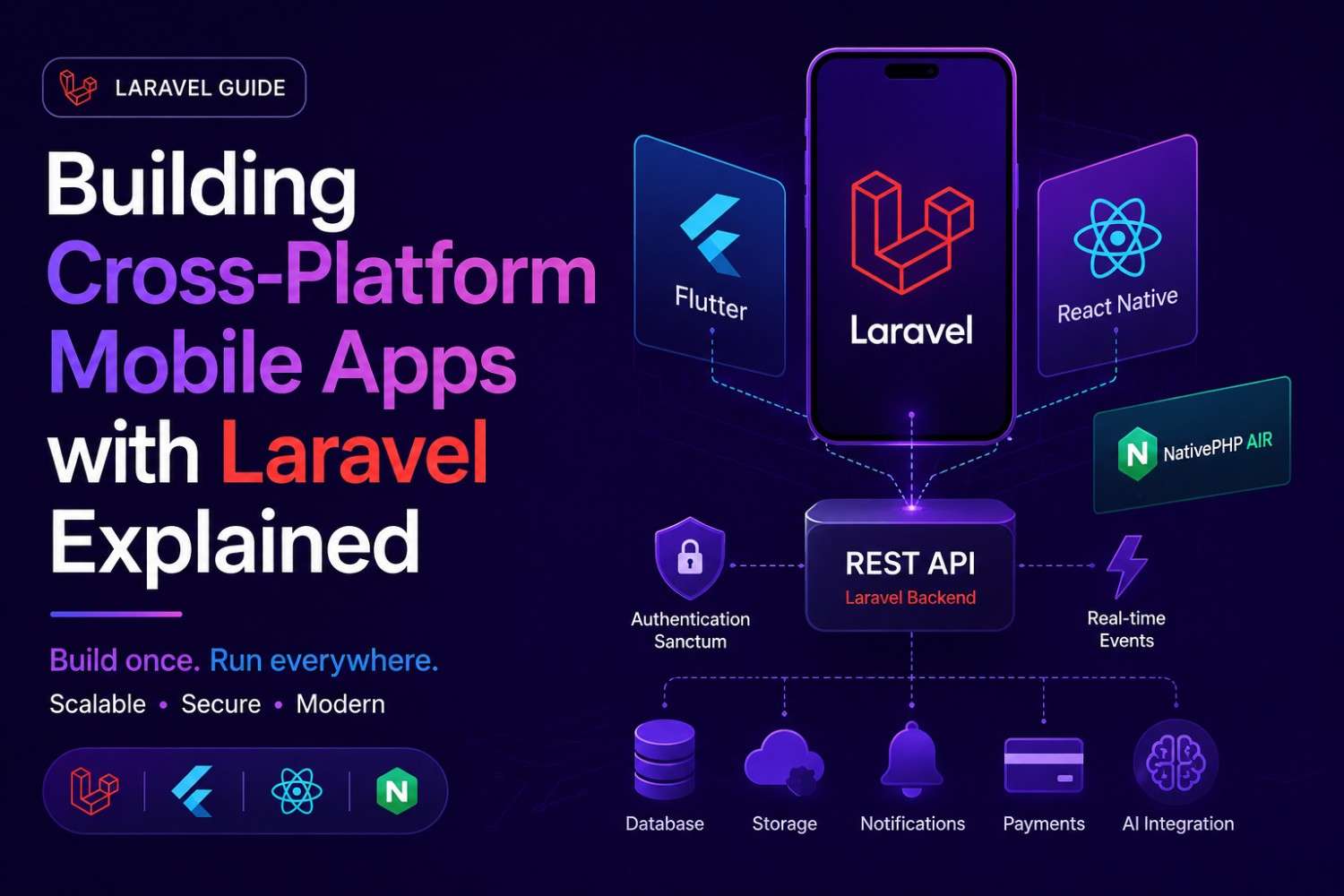

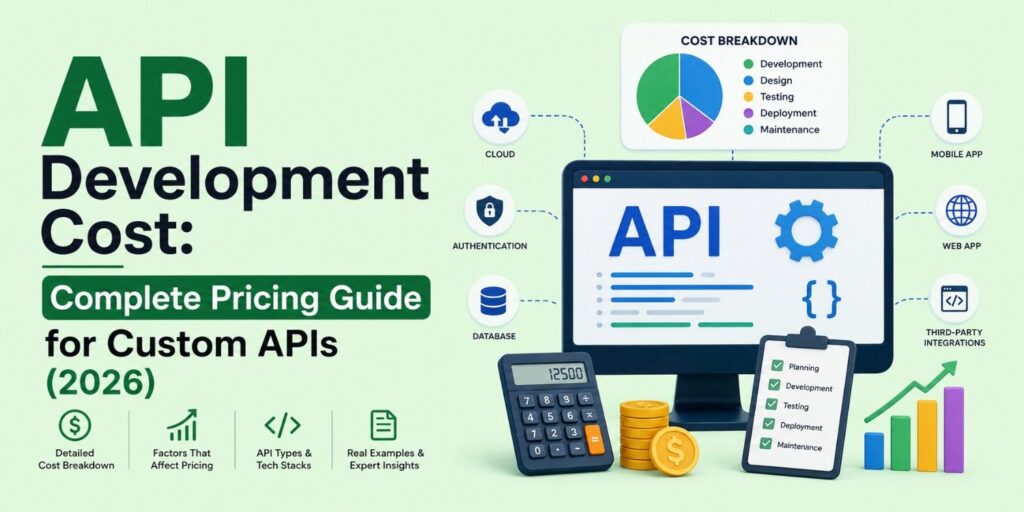
Whether you’re building a SaaS platform, mobile application, enterprise software, or integrating third-party services, understanding API development costs is essential before starting your project. While a simple API may cost only a few thousand dollars, enterprise-grade APIs that power financial platforms, healthcare systems, or high-traffic applications can require investments well into six figures.
The challenge is that there isn’t a fixed price for API development. Two APIs with a similar number of endpoints can have dramatically different costs depending on authentication methods, business logic, integrations, scalability requirements, security standards, compliance obligations, cloud infrastructure, and long-term maintenance.
For example, an internal API that connects a customer portal to a database is significantly less complex than a public API handling thousands of requests per second with OAuth authentication, rate limiting, real-time notifications, audit logging, and PCI DSS compliance. Although both are technically APIs, the engineering effort, testing requirements, infrastructure, and ongoing operational costs differ substantially.
This guide explains every factor that influences API development pricing, from project planning and architecture selection to deployment, documentation, monitoring, and maintenance. You’ll also find practical pricing estimates, comparison tables, and real-world examples to help you plan a realistic budget and choose the right development approach.
API Development Cost at a Glance
Most API projects fall within one of four complexity levels. The table below provides a realistic starting point for budgeting.
| API Complexity | Typical Development Cost | Estimated Timeline | Common Use Cases |
|---|---|---|---|
| Basic API | $3,000 – $8,000 | 2–4 Weeks | CRUD operations, internal tools, simple mobile apps |
| Medium Complexity API | $8,000 – $25,000 | 1–3 Months | SaaS products, CRM integrations, customer portals |
| Advanced API | $25,000 – $80,000 | 3–6 Months | Marketplaces, fintech, healthcare platforms, IoT systems |
| Enterprise API Platform | $80,000 – $250,000+ | 6–12 Months | Banking, insurance, government, enterprise ecosystems |
Key Takeaway: The number of API endpoints is only one pricing factor. Security, integrations, business logic, scalability, compliance, documentation, and infrastructure often have a much greater impact on the final development cost.
What Is API Development?
An Application Programming Interface (API) is a software intermediary that enables different applications, services, or systems to communicate using predefined rules. Instead of accessing a database directly, applications exchange requests and responses through API endpoints, making integrations more secure, scalable, and maintainable.
Modern businesses rely on APIs to connect websites, mobile applications, payment gateways, cloud platforms, CRM systems, ERP software, AI services, and IoT devices. Whether a customer logs into an app using Google, pays with Stripe, receives an SMS through Twilio, or tracks a shipment, APIs are working behind the scenes to exchange data seamlessly.
A typical API request follows this process:
- A client application sends a request.
- The API authenticates and validates the request.
- Business logic processes the request.
- The database or external services retrieve or update data.
- The API returns a structured response, usually in JSON or XML format.
Although this workflow appears straightforward, enterprise APIs often involve additional layers such as authentication, authorization, caching, rate limiting, logging, monitoring, and error handling all of which increase development effort and cost.
Types of APIs
Choosing the right API type directly affects development complexity, performance, scalability, and budget.
| API Type | Primary Purpose | Typical Complexity |
|---|---|---|
| REST API | Standard web applications and mobile apps | Low to Medium |
| GraphQL API | Flexible data fetching for modern frontends | Medium to High |
| SOAP API | Legacy enterprise systems | High |
| gRPC API | High-performance microservices | High |
| WebSocket API | Real-time communication | High |
| Internal API | Communication within an organization | Low to Medium |
| Public API | Third-party developer access | Medium to High |
| Partner API | Secure data exchange with business partners | Medium |
REST APIs remain the most widely adopted due to their simplicity, broad compatibility, and mature ecosystem. However, GraphQL is increasingly popular for applications requiring flexible data retrieval, while gRPC excels in microservices and high-performance distributed systems. SOAP, although less common in new projects, continues to serve industries with strict compliance and legacy integration requirements.
Why API Development Costs Vary So Much
One of the biggest misconceptions is that API pricing depends solely on the number of endpoints. In reality, two APIs with the same endpoint count can differ dramatically in cost because the underlying engineering challenges vary significantly.
Consider the following examples:
Example 1: Basic Inventory API
A warehouse management system needs an internal API to create, update, and retrieve inventory records.
Features include:
- User authentication
- CRUD operations
- Basic validation
- PostgreSQL database
- JSON responses
Estimated cost: $4,000–$8,000
Example 2: Food Delivery Platform API
A food delivery platform requires APIs for customers, restaurants, drivers, and administrators.
Additional requirements include:
- User authentication with OAuth 2.0
- Real-time order tracking
- Push notifications
- Payment gateway integration
- Geolocation services
- Role-based permissions
- Admin analytics
- Cloud storage
- Background jobs
- Rate limiting
- API documentation
- Monitoring and logging
Estimated cost: $45,000–$90,000+
While both projects involve APIs, the second introduces significantly more engineering effort due to its broader feature set, integrations, and operational requirements.
What’s Included in API Development?
Many clients assume API development only involves writing endpoints. In reality, building a production-ready API encompasses multiple phases, each contributing to the overall cost.
| Development Phase | Purpose | Impact on Cost |
|---|---|---|
| Discovery & Planning | Define requirements, workflows, and architecture | Medium |
| API Design | Endpoint structure, request/response models, versioning | Medium |
| Database Design | Data modeling, relationships, indexing | High |
| Backend Development | Business logic and endpoint implementation | Very High |
| Authentication & Authorization | Secure access control | High |
| Third-Party Integrations | Payment, messaging, CRM, cloud services | High |
| Testing & Quality Assurance | Unit, integration, load, and security testing | High |
| Documentation | OpenAPI/Swagger specifications and developer guides | Medium |
| Deployment | CI/CD pipelines, containers, cloud infrastructure | Medium |
| Monitoring & Maintenance | Logging, alerts, updates, bug fixes | Ongoing |
Organizations that skip planning or documentation often face higher maintenance costs and slower development cycles in the long run.
Average API Development Cost by Business Size
The scale of your business and the maturity of your product also influence development budgets.
| Business Type | Typical Budget | Common Objectives |
|---|---|---|
| Startup | $5,000–$20,000 | MVP development, investor demos, early customer validation |
| Small Business | $15,000–$40,000 | Internal automation, customer portals, operational efficiency |
| Mid-Sized Company | $40,000–$120,000 | Multi-system integrations, SaaS expansion, workflow automation |
| Enterprise | $120,000–$500,000+ | Large-scale ecosystems, compliance, high availability, global scalability |
Startups often prioritize speed and essential functionality, whereas enterprises invest heavily in security, redundancy, governance, and long-term scalability.
Key Takeaways
Before requesting development quotes, it’s important to understand that API pricing reflects much more than coding effort. Architecture decisions, security requirements, integrations, cloud infrastructure, testing, documentation, and ongoing maintenance all contribute to the total cost of ownership. A well-planned API may require a higher initial investment, but it often reduces technical debt, improves scalability, and lowers maintenance costs over time.
Factors That Influence API Development Cost
No two API projects are identical. Even if two businesses request APIs with a similar number of endpoints, the final development cost can differ significantly due to architecture, business logic, integrations, security requirements, performance expectations, and long-term scalability.
Understanding these cost drivers allows you to estimate budgets more accurately and prioritize features that deliver the highest business value.
1. Project Scope and Business Requirements
The biggest cost driver isn’t the programming language or framework it’s what the API is expected to accomplish.
For example, an internal employee management API that stores and retrieves staff records is far simpler than an API powering a ride-sharing platform that handles real-time driver locations, payments, notifications, and dynamic pricing.
Development complexity increases when APIs must support:
- Multiple user roles
- Complex workflows
- Custom business rules
- Real-time communication
- Data synchronization
- Automation
- Multi-tenant architecture
- Reporting dashboards
- Workflow approvals
As business requirements expand, developers spend more time on planning, architecture, testing, and optimization—not just writing code.
Cost Impact
| Requirement Complexity | Estimated Cost Impact |
|---|---|
| Basic CRUD Operations | Low |
| Business Rules & Automation | Medium |
| Workflow Management | High |
| Real-Time Features | High |
| AI & Machine Learning Integration | Very High |
Pro Tip: A well-defined project scope minimizes costly requirement changes during development.
2. Number of API Endpoints
An API endpoint is a specific URL that allows applications to interact with a resource.
For example:
GET /users
POST /orders
PUT /products/{id}
DELETE /cart/{id}
While endpoint count influences pricing, it shouldn’t be used as the primary estimation metric.
A simple “Create User” endpoint might take only a few hours to develop, while a “Process Payment” endpoint involving fraud detection, transaction logging, third-party APIs, retries, and compliance checks could require several days.
Typical Endpoint Complexity
| Endpoint Type | Complexity |
|---|---|
| Read Data | Low |
| CRUD Operations | Low |
| Search & Filtering | Medium |
| Authentication | Medium |
| File Upload | Medium |
| Payment Processing | High |
| AI Processing | High |
| Reporting & Analytics | Very High |
The functionality behind each endpoint matters far more than the total number of endpoints.
3. API Architecture
Architecture determines how your API is structured, deployed, and maintained over time. Choosing the right architecture affects development speed, scalability, infrastructure costs, and future maintenance.
Architecture Comparison
| Architecture | Initial Cost | Scalability | Maintenance | Best For |
|---|---|---|---|---|
| Monolithic | Low | Medium | Medium | MVPs & Small Applications |
| Modular Monolith | Medium | High | Medium | Growing SaaS Products |
| Microservices | High | Excellent | High | Enterprise Systems |
| Serverless | Medium | Excellent | Low to Medium | Event-Driven Workloads |
| Event-Driven | High | Excellent | High | Large Distributed Platforms |
Monolithic APIs
Everything runs within a single application.
Advantages:
- Faster development
- Lower infrastructure costs
- Easier deployment
- Suitable for startups
Limitations:
- Harder to scale individual components
- Larger deployments
- Increased technical debt over time
Microservices APIs
Each service handles a specific business capability.
Examples:
- User Service
- Billing Service
- Notification Service
- Inventory Service
Benefits include:
- Independent deployments
- Better fault isolation
- Team scalability
- Easier technology adoption
However, microservices require:
- API Gateway
- Service discovery
- Container orchestration
- Distributed logging
- Monitoring
- Message brokers
These additional components increase both development and operational costs.
Serverless APIs
Serverless platforms such as AWS Lambda, Azure Functions, and Google Cloud Functions reduce infrastructure management by executing code only when requests occur.
They’re ideal for:
- Lightweight APIs
- Scheduled tasks
- Webhooks
- File processing
- Event-driven applications
Although serverless reduces infrastructure overhead, poor architecture can lead to higher costs due to excessive function invocations and vendor lock-in.
4. Authentication and Authorization
Security should never be treated as an optional feature. Implementing secure authentication and authorization mechanisms requires additional planning, development, and testing.
Common authentication methods include:
| Authentication Method | Complexity | Typical Use Case |
|---|---|---|
| API Keys | Low | Internal APIs |
| Basic Authentication | Low | Legacy Systems |
| JWT | Medium | Mobile & Web Apps |
| OAuth 2.0 | High | Public APIs |
| OpenID Connect | High | Single Sign-On |
| Multi-Factor Authentication | High | Banking & Healthcare |
Additional security features include:
- Role-Based Access Control (RBAC)
- Attribute-Based Access Control (ABAC)
- Token refresh mechanisms
- Session management
- Rate limiting
- IP whitelisting
- Encryption at rest
- TLS encryption in transit
- Audit logs
Security often represents 15–30% of the total development effort for enterprise-grade APIs.
5. Business Logic Complexity
Business logic refers to the rules that determine how an API behaves.
Simple examples include:
- Validate email format
- Update inventory quantity
- Retrieve order history
Complex business logic may involve:
- Dynamic pricing
- Loyalty programs
- Tax calculations
- Commission structures
- Subscription billing
- Fraud detection
- Inventory forecasting
- Currency conversion
- AI recommendations
Comparison
| Logic Type | Development Effort |
|---|---|
| Data Retrieval | Low |
| CRUD Validation | Low |
| Multi-Step Workflows | Medium |
| Financial Calculations | High |
| AI Decision Making | Very High |
Business logic often requires extensive testing to ensure accuracy, particularly in regulated industries such as finance and healthcare.
6. Third-Party Integrations
Modern APIs rarely operate in isolation. Most connect with external platforms to extend functionality, automate workflows, or exchange data.
Common integrations include:
| Integration | Typical Purpose |
|---|---|
| Stripe | Payment Processing |
| PayPal | Online Payments |
| Twilio | SMS & Voice |
| SendGrid | Transactional Emails |
| Firebase Cloud Messaging | Push Notifications |
| Google Maps | Location Services |
| Salesforce | CRM Integration |
| HubSpot | Marketing Automation |
| AWS S3 | File Storage |
| OpenAI API | AI Features |
| Slack | Team Notifications |
| Shopify | E-commerce |
Each integration introduces:
- Authentication setup
- API documentation review
- Error handling
- Rate limit management
- Version compatibility
- Webhook implementation
- Testing
- Monitoring
Depending on complexity, a single third-party integration may require anywhere from 8 to 80+ development hours.
7. Data Storage and Database Design
Choosing the right database impacts both development effort and long-term scalability.
| Database | Best For | Cost Impact |
|---|---|---|
| MySQL | Traditional Applications | Low |
| PostgreSQL | Enterprise Systems | Medium |
| MongoDB | Flexible Schemas | Medium |
| Redis | High-Speed Caching | Medium |
| Firebase | Mobile Applications | Medium |
| Elasticsearch | Search Platforms | High |
Development costs increase when applications require:
- Database replication
- Partitioning
- High availability
- Data migration
- Full-text search
- Data warehousing
- Analytics pipelines
Well-designed schemas reduce maintenance costs and improve API performance over time.
8. Scalability Requirements
Some APIs serve hundreds of users, while others process millions of requests every day.
Higher scalability requirements demand additional engineering effort, including:
- Horizontal scaling
- Load balancing
- Distributed caching
- Database optimization
- Queue management
- Auto-scaling
- Content Delivery Networks (CDNs)
- Performance monitoring
| Traffic Level | Typical Infrastructure Complexity |
|---|---|
| Under 10,000 requests/day | Low |
| 10,000–100,000 requests/day | Medium |
| 100,000–1 Million requests/day | High |
| Millions of requests/day | Enterprise |
Ignoring scalability during development can lead to expensive architectural changes later.
Cost Impact Summary
The table below highlights how each factor contributes to the overall API development budget.
| Cost Factor | Impact on Budget | Can It Be Optimized? |
|---|---|---|
| Project Scope | ⭐⭐⭐⭐⭐ | Partially |
| Business Logic | ⭐⭐⭐⭐⭐ | No |
| API Architecture | ⭐⭐⭐⭐ | Yes |
| Authentication & Security | ⭐⭐⭐⭐ | Limited |
| Third-Party Integrations | ⭐⭐⭐⭐ | Yes |
| Database Design | ⭐⭐⭐ | Yes |
| Scalability | ⭐⭐⭐⭐ | Yes |
| Documentation | ⭐⭐ | Yes |
| Testing | ⭐⭐⭐⭐ | No |
| Compliance Requirements | ⭐⭐⭐⭐⭐ | Limited |
Key Takeaway: The most expensive APIs aren’t necessarily those with the most endpoints they’re the ones that solve complex business problems while meeting high standards for security, scalability, performance, and reliability.
API Development Cost by API Type
Not all APIs are built the same. The API architecture and communication protocol you choose directly influence development effort, testing requirements, infrastructure costs, and long-term maintenance.
For example, a straightforward REST API for an internal business application can often be developed relatively quickly, while a GraphQL API supporting complex client queries or a gRPC-based microservices platform requires more planning and specialized expertise.
The right choice depends on your business goals not simply on what’s trending.
API Cost Comparison at a Glance
| API Type | Estimated Development Cost | Complexity | Performance | Best For |
|---|---|---|---|---|
| REST API | $3,000–$40,000 | Low–Medium | High | Web apps, mobile apps, SaaS |
| GraphQL API | $8,000–$60,000 | Medium–High | High | Data-heavy applications |
| SOAP API | $10,000–$80,000 | High | Medium | Enterprise & legacy systems |
| gRPC API | $15,000–$100,000+ | High | Excellent | Microservices & internal communication |
| WebSocket API | $12,000–$75,000 | High | Excellent | Real-time applications |
| Public API | $15,000–$120,000 | High | High | Developer platforms |
| Partner API | $8,000–$50,000 | Medium | High | B2B integrations |
| Internal API | $3,000–$25,000 | Low | High | Internal business systems |
Important: These estimates assume custom API development and exclude long-term cloud hosting, monitoring, and maintenance costs.
REST API Development Cost
REST (Representational State Transfer) remains the most widely adopted API architecture due to its simplicity, flexibility, and compatibility with virtually every programming language and framework.
REST APIs communicate over HTTP using standard methods such as:
- GET
- POST
- PUT
- PATCH
- DELETE
Responses are typically returned in JSON format, making REST ideal for modern web and mobile applications.
Typical REST API Features
- CRUD operations
- Authentication
- Pagination
- Filtering
- Sorting
- File uploads
- Webhooks
- Third-party integrations
- Error handling
REST API Pricing
| Project Size | Estimated Cost |
|---|---|
| Basic CRUD API | $3,000–$8,000 |
| Business Application | $8,000–$20,000 |
| SaaS Backend API | $20,000–$45,000 |
| Enterprise REST Platform | $45,000–$120,000+ |
Advantages
Large developer ecosystem
Faster development
Easier maintenance
Excellent framework support
Broad client compatibility
Considerations
As applications grow, REST endpoints can become numerous, making versioning and documentation increasingly important.
GraphQL API Development Cost
GraphQL enables clients to request exactly the data they need rather than receiving fixed responses from multiple REST endpoints.
Instead of requesting several resources separately, a client can retrieve related data in a single request.
This improves frontend efficiency but increases backend complexity.
GraphQL Development Challenges
Developers must design:
- Schema definitions
- Resolvers
- Query optimization
- Nested relationships
- Caching strategies
- Authorization rules
- Query complexity analysis
GraphQL Cost Estimate
| Complexity | Estimated Cost |
|---|---|
| Small Project | $8,000–$18,000 |
| SaaS Platform | $18,000–$40,000 |
| Enterprise Platform | $40,000–$80,000+ |
Best For
- Mobile applications
- SaaS dashboards
- Analytics platforms
- E-commerce
- Data-rich applications
Advantages
- Fewer network requests
- Flexible data retrieval
- Better frontend performance
- Reduced over-fetching and under-fetching
Challenges
GraphQL requires careful security implementation to prevent expensive or malicious queries. Features such as query depth limiting, complexity analysis, and caching add development effort.
SOAP API Development Cost
SOAP (Simple Object Access Protocol) remains common in industries where reliability, standardized contracts, and compliance outweigh development speed.
Although many modern systems favor REST or GraphQL, SOAP continues to power enterprise software, banking systems, insurance platforms, and government applications.
Common SOAP Features
- XML messaging
- WSDL contracts
- Strict schemas
- Enterprise authentication
- Transaction support
- Built-in error handling
Estimated Development Cost
| Project Type | Estimated Cost |
|---|---|
| Small Enterprise Integration | $10,000–$25,000 |
| Multi-System Integration | $25,000–$60,000 |
| Enterprise Platform | $60,000–$120,000+ |
SOAP projects generally require more documentation, testing, and integration effort than REST-based solutions.
gRPC API Development Cost
gRPC is a high-performance communication framework developed by Google that uses Protocol Buffers (Protobuf) instead of JSON.
Its compact binary format significantly reduces payload size and improves communication speed between distributed services.
Common Use Cases
- Microservices
- Internal enterprise communication
- AI platforms
- IoT
- Financial systems
- Streaming applications
Cost Breakdown
| Project Size | Estimated Cost |
|---|---|
| Internal Services | $15,000–$30,000 |
| Large Microservices Platform | $30,000–$80,000 |
| Enterprise Distributed System | $80,000–$150,000+ |
Although development costs are higher, gRPC often delivers long-term savings through improved performance and lower infrastructure overhead.
WebSocket API Development Cost
Unlike REST APIs, WebSocket APIs maintain persistent connections between clients and servers, enabling instant bidirectional communication.
They’re essential when data must update continuously without repeated HTTP requests.
Common Applications
- Chat applications
- Live sports updates
- Stock trading
- Online gaming
- GPS tracking
- Collaboration tools
- Live dashboards
Typical Cost
| Project | Estimated Cost |
|---|---|
| Chat Application | $12,000–$25,000 |
| Real-Time Dashboard | $20,000–$40,000 |
| Enterprise Streaming Platform | $40,000–$90,000+ |
Persistent connections require additional infrastructure planning, connection management, and scalability testing.
Public vs. Partner vs. Internal APIs
The intended audience of an API also affects development costs.
| API Category | Security | Documentation | Maintenance | Typical Cost |
|---|---|---|---|---|
| Internal API | Moderate | Basic | Low | $3,000–$25,000 |
| Partner API | High | Medium | Medium | $8,000–$50,000 |
| Public API | Very High | Extensive | High | $15,000–$120,000+ |
Internal APIs
Designed exclusively for internal teams and systems.
They typically require:
- Employee authentication
- Internal documentation
- Limited versioning
- Controlled environments
Lower maintenance usually translates to lower overall costs.
Partner APIs
Partner APIs enable secure communication between trusted organizations.
Examples include:
- Payment processors
- Shipping companies
- Healthcare providers
- Supplier networks
They require:
- Strong authentication
- Audit logging
- API contracts
- Service-level agreements (SLAs)
- Version management
Public APIs
Public APIs expose services to external developers.
Examples include:
- Stripe API
- GitHub API
- X (Twitter) API
- Google Maps API
Because anyone can consume these APIs, they require:
- Developer portals
- Comprehensive documentation
- Rate limiting
- API keys
- Usage analytics
- Billing systems
- Monitoring
- Abuse prevention
These additional responsibilities significantly increase both development and operational costs.
Which API Type Offers the Best ROI?
The “best” API isn’t necessarily the cheapest. The ideal choice balances current requirements with long-term scalability and maintenance.
| Business Scenario | Recommended API |
|---|---|
| Startup MVP | REST API |
| Internal Business Tools | REST API |
| E-commerce Platform | REST or GraphQL |
| SaaS Dashboard | GraphQL |
| Enterprise Integration | SOAP or REST |
| Microservices Platform | gRPC |
| Real-Time Collaboration | WebSocket |
| Live Tracking Systems | WebSocket |
| Banking Systems | SOAP or gRPC |
| Healthcare Platforms | REST or SOAP |
For most organizations, REST provides the fastest time-to-market and the broadest ecosystem support. However, as products evolve, GraphQL, gRPC, or WebSockets may become better investments depending on performance, scalability, and user experience requirements.
API Development Cost by Technology Stack
Choosing the right technology stack influences far more than the initial development cost. It affects development speed, hiring availability, application performance, long-term maintenance, scalability, security, and even cloud infrastructure expenses.
A mature framework with a large developer ecosystem can reduce development time, while a highly specialized stack may deliver better performance but require more experienced (and expensive) engineers.
Rather than asking, “Which framework is the cheapest?”, businesses should ask:
“Which technology delivers the best long-term value for our project?”
Technology Stack Cost Comparison
| Technology | Average Development Cost | Learning Curve | Scalability | Best For |
|---|---|---|---|---|
| Laravel (PHP) | $5,000–$50,000 | Low | High | Business applications, SaaS, CRMs |
| Node.js + Express | $6,000–$60,000 | Medium | High | APIs, real-time apps, startups |
| NestJS | $10,000–$70,000 | Medium | Excellent | Enterprise Node.js applications |
| Django | $7,000–$65,000 | Medium | High | Healthcare, education, enterprise |
| FastAPI | $8,000–$70,000 | Medium | Excellent | AI, machine learning, high-performance APIs |
| Spring Boot | $20,000–$150,000+ | High | Excellent | Banking, enterprise software |
| ASP.NET Core | $15,000–$120,000 | Medium | Excellent | Microsoft ecosystems |
| Ruby on Rails | $7,000–$55,000 | Low | High | MVPs and SaaS products |
| Go (Golang) | $20,000–$140,000 | High | Excellent | High-performance systems |
Note: The technology itself doesn’t determine the price developer expertise, ecosystem maturity, and project complexity do.
Laravel API Development Cost
Laravel has become one of the most popular PHP frameworks for building RESTful APIs because it combines rapid development with strong security, excellent documentation, and a mature ecosystem.
Its built-in tools reduce development effort for authentication, routing, validation, queues, caching, scheduling, and database management.
Typical Laravel API Projects
- SaaS applications
- CRM systems
- ERP software
- Customer portals
- Marketplace platforms
- Booking systems
Estimated Development Cost
| Project Type | Estimated Cost |
|---|---|
| Small Business API | $5,000–$12,000 |
| SaaS Backend | $12,000–$35,000 |
| Enterprise Platform | $35,000–$80,000+ |
Advantages
- Rapid development
- Built-in authentication
- Excellent ORM (Eloquent)
- Strong security features
- Large developer community
- Lower maintenance costs
Considerations
Laravel excels in most business applications but may not be the first choice for extremely latency-sensitive systems handling millions of concurrent requests.
Node.js API Development Cost
Node.js is widely used for building scalable APIs thanks to its event-driven, non-blocking architecture.
It’s particularly well suited for applications that handle many simultaneous connections.
Common Use Cases
- Chat applications
- Streaming platforms
- Social networks
- Real-time dashboards
- Collaboration tools
- API gateways
Estimated Cost
| Project | Estimated Cost |
|---|---|
| Startup API | $6,000–$18,000 |
| SaaS Platform | $18,000–$45,000 |
| Enterprise API | $45,000–$100,000+ |
Advantages
- Excellent scalability
- Large npm ecosystem
- High performance
- JavaScript across frontend and backend
- Strong community support
Challenges
Managing asynchronous operations, dependency updates, and package security requires experienced developers, particularly in larger applications.
NestJS API Development Cost
NestJS builds on Node.js and TypeScript, offering a structured, enterprise-ready framework inspired by Angular’s architecture.
Its modular design, dependency injection, and built-in support for testing make it well suited for large development teams.
Best For
- Enterprise SaaS
- Microservices
- Fintech
- Healthcare
- Large development teams
Estimated Cost
| Project Size | Estimated Cost |
|---|---|
| Medium Application | $10,000–$30,000 |
| Enterprise Platform | $30,000–$75,000 |
| Distributed Systems | $75,000–$150,000+ |
Although NestJS may increase initial development costs, it often reduces long-term maintenance through better code organization and scalability.
Django API Development Cost
Django is a mature Python framework known for its “batteries-included” philosophy, providing authentication, an administrative interface, ORM, and security features out of the box.
Combined with Django REST Framework (DRF), it enables rapid API development.
Common Industries
- Education
- Healthcare
- Government
- Enterprise software
- Research platforms
Pricing
| Project | Estimated Cost |
|---|---|
| Small API | $7,000–$18,000 |
| Medium SaaS | $18,000–$45,000 |
| Enterprise Solution | $45,000–$100,000+ |
Advantages
- Excellent security
- Rapid development
- Mature ecosystem
- Clean architecture
- Large Python community
Django is especially attractive when APIs are expected to integrate with data science or machine learning workflows.
FastAPI Development Cost
FastAPI has quickly gained popularity for high-performance Python APIs. Built on ASGI, it offers automatic OpenAPI documentation, asynchronous request handling, and excellent performance.
Best Use Cases
- AI platforms
- Machine learning services
- Data analytics
- High-performance APIs
- IoT platforms
Estimated Cost
| Project | Estimated Cost |
|---|---|
| AI API | $8,000–$25,000 |
| ML Platform | $25,000–$60,000 |
| Enterprise AI System | $60,000–$140,000+ |
FastAPI’s automatic request validation and documentation can reduce development time while improving API consistency.
Spring Boot API Development Cost
Spring Boot remains one of the leading frameworks for large-scale Java applications where stability, scalability, and security are critical.
Frequently Used In
- Banking
- Insurance
- Telecommunications
- Logistics
- Government
- Large enterprises
Estimated Cost
| Application | Estimated Cost |
|---|---|
| Enterprise API | $20,000–$60,000 |
| Banking Platform | $60,000–$150,000 |
| Large Distributed Platform | $150,000–$300,000+ |
While development costs are higher due to Java expertise, Spring Boot is an excellent long-term investment for mission-critical systems.
ASP.NET Core API Development Cost
ASP.NET Core is Microsoft’s modern cross-platform framework for building secure, high-performance APIs.
Organizations already invested in the Microsoft ecosystem often benefit from seamless integration with Azure, Active Directory, SQL Server, and other Microsoft services.
Estimated Cost
| Project | Estimated Cost |
|---|---|
| Business Application | $15,000–$40,000 |
| Enterprise Solution | $40,000–$120,000+ |
ASP.NET Core is commonly chosen for enterprise resource planning (ERP), customer relationship management (CRM), and internal business applications.
Ruby on Rails API Development Cost
Ruby on Rails emphasizes developer productivity and convention over configuration, making it a strong option for startups that need to launch quickly.
Best For
- MVPs
- Startup SaaS
- Internal business tools
- Marketplace platforms
Estimated Cost
| Project | Estimated Cost |
|---|---|
| MVP API | $7,000–$18,000 |
| SaaS Platform | $18,000–$45,000 |
Although Rails enables rapid development, businesses should consider local developer availability when planning long-term maintenance.
Go (Golang) API Development Cost
Go is designed for simplicity, concurrency, and performance. It’s frequently used to build APIs that handle high request volumes with low resource consumption.
Common Applications
- Cloud-native services
- API gateways
- DevOps tools
- Container platforms
- High-traffic SaaS
- Networking services
Estimated Cost
| Project | Estimated Cost |
|---|---|
| High-Performance API | $20,000–$60,000 |
| Cloud Platform | $60,000–$150,000+ |
Because experienced Go developers are relatively specialized, hourly rates can be higher. However, improved runtime performance and lower infrastructure requirements may offset those costs over the application’s lifecycle.
Which Technology Stack Should You Choose?
| Business Requirement | Recommended Technology |
|---|---|
| Startup MVP | Laravel or Ruby on Rails |
| Traditional Business Application | Laravel or ASP.NET Core |
| Real-Time Application | Node.js |
| Enterprise SaaS | NestJS or Spring Boot |
| AI & Machine Learning | FastAPI |
| Healthcare Platform | Django |
| Banking & Finance | Spring Boot or ASP.NET Core |
| High-Traffic APIs | Go |
| Microservices | NestJS, Go, or Spring Boot |
Key Takeaway
There is no universally “best” technology stack for API development. The right choice depends on your application’s complexity, expected traffic, team expertise, integration requirements, and long-term maintenance strategy. A framework with a slightly higher upfront development cost can often reduce technical debt, improve scalability, and lower operational expenses over the life of the project.
Additional Costs to Consider Beyond API Development
Many businesses budget only for the initial development phase, overlooking the ongoing costs required to operate a secure, scalable, and reliable API. While these expenses may not appear in the first project estimate, they can significantly impact the total cost of ownership over time.
The table below outlines common post-development expenses and why they matter.
| Cost Category | Why It’s Important | Estimated Cost |
|---|---|---|
| Security Implementation | Protects against unauthorized access, data breaches, and cyber threats | $2,000–$20,000+ |
| API Testing & QA | Ensures reliability, performance, and bug-free releases | 15–25% of development budget |
| API Documentation | Simplifies integrations and reduces support requests | $500–$5,000 |
| Cloud Infrastructure | Hosting, databases, storage, networking, and scaling | $100–$5,000+/month |
| Monitoring & Logging | Tracks uptime, errors, and performance metrics | $50–$2,000+/month |
| Compliance | GDPR, HIPAA, PCI DSS, SOC 2, or industry regulations | Varies by industry |
| Versioning & Maintenance | Bug fixes, updates, feature enhancements, and security patches | 15–25% of development cost annually |
Security
Security is one of the most important investments in API development. Features such as OAuth 2.0, JWT authentication, encryption, rate limiting, API gateways, and role-based access control help protect sensitive data and reduce the risk of unauthorized access. Industries like healthcare, finance, and e-commerce often require additional safeguards to meet regulatory standards.
Testing and Quality Assurance
Comprehensive testing goes beyond verifying that endpoints return the correct response. Production-ready APIs should include unit testing, integration testing, load testing, performance testing, and security testing. Investing in quality assurance early reduces bugs, downtime, and costly fixes after launch.
Cloud Infrastructure
Most modern APIs are deployed on cloud platforms such as AWS, Microsoft Azure, or Google Cloud. Monthly infrastructure costs depend on traffic volume, compute resources, storage, databases, caching, content delivery networks (CDNs), and backup strategies. While small applications may operate on a modest budget, enterprise platforms handling millions of requests require significantly greater infrastructure investment.
Maintenance and Continuous Improvements
An API is rarely “finished.” As business requirements evolve, APIs require updates to support new features, integrations, operating systems, and security standards. Ongoing maintenance ensures compatibility, improves performance, and extends the lifespan of the platform.
Key Takeaway: When planning your budget, consider the total cost of ownership rather than only the initial development quote.
Real-World API Development Cost Examples
The following examples demonstrate how project scope influences API development costs.
| Project | Estimated Cost | Estimated Timeline |
|---|---|---|
| Restaurant Ordering API | $8,000–$15,000 | 4–6 Weeks |
| CRM Integration API | $12,000–$25,000 | 6–8 Weeks |
| AI Chatbot API | $25,000–$70,000 | 2–4 Months |
| Healthcare Patient Portal API | $50,000–$120,000 | 4–8 Months |
| FinTech Payment API | $60,000–$150,000+ | 6–12 Months |
Restaurant Ordering API
A restaurant ordering platform typically includes menu management, user authentication, order placement, payment gateway integration, and order tracking. While technically straightforward, integrations with payment processors and notification services increase the overall budget.
CRM Integration API
A CRM integration API synchronizes customer information between systems such as Salesforce, HubSpot, ERP platforms, or marketing automation tools. Costs depend on the number of connected systems, synchronization frequency, and data transformation requirements.
AI Chatbot API
AI-powered APIs integrate with large language models, vector databases, search services, and conversation management systems. Development costs increase when implementing prompt engineering, context management, moderation, analytics, and usage optimization.
Healthcare Patient Portal API
Healthcare APIs must prioritize security, audit logging, encryption, and regulatory compliance while supporting appointment scheduling, medical records, patient authentication, and integrations with hospital management systems.
FinTech Payment API
Payment APIs require secure transaction processing, fraud prevention, reconciliation, audit trails, and compliance with financial regulations. Due to their complexity and security requirements, these projects typically represent the highest investment.
How to Reduce API Development Costs Without Compromising Quality
Reducing costs doesn’t mean sacrificing performance or security. Strategic planning and the right technical decisions can significantly improve development efficiency while keeping long-term maintenance manageable.
1. Clearly Define Project Requirements
Changing requirements mid-project is one of the most common causes of budget overruns. Documenting business goals, workflows, and required integrations before development begins reduces rework and accelerates delivery.
2. Build an MVP First
Instead of launching every feature at once, develop a Minimum Viable Product (MVP) with the core functionality needed to validate your idea. Additional features can be introduced based on user feedback and business priorities.
3. Choose the Right Architecture
Not every application requires a microservices architecture. For many startups and small businesses, a well-designed modular monolith offers a faster, more cost-effective path to market while remaining scalable.
4. Reuse Proven Solutions
Leverage established authentication providers, payment gateways, notification services, and cloud platforms rather than building custom implementations from scratch. This reduces development time and improves reliability.
5. Invest in Documentation and Automated Testing
Comprehensive API documentation and automated testing reduce onboarding time, minimize regression issues, and lower long-term maintenance costs.
6. Plan for Scalability
Designing an API with future growth in mind helps avoid expensive architectural rewrites as user demand increases.
Conclusion
API development is an investment in the foundation of modern digital products. Whether you’re building a SaaS platform, integrating third-party services, or creating an enterprise application, the overall cost depends on far more than the number of endpoints. Business requirements, architecture, security, technology stack, integrations, scalability, and long-term maintenance all influence the final budget.
Rather than focusing solely on the lowest development quote, evaluate the total cost of ownership. A well-designed API built with scalable architecture, robust security, comprehensive testing, and clear documentation may require a higher upfront investment, but it often delivers greater reliability, lower maintenance costs, and a better return on investment over time.